
How to Modify Yoga Poses Safely in Hot Classes
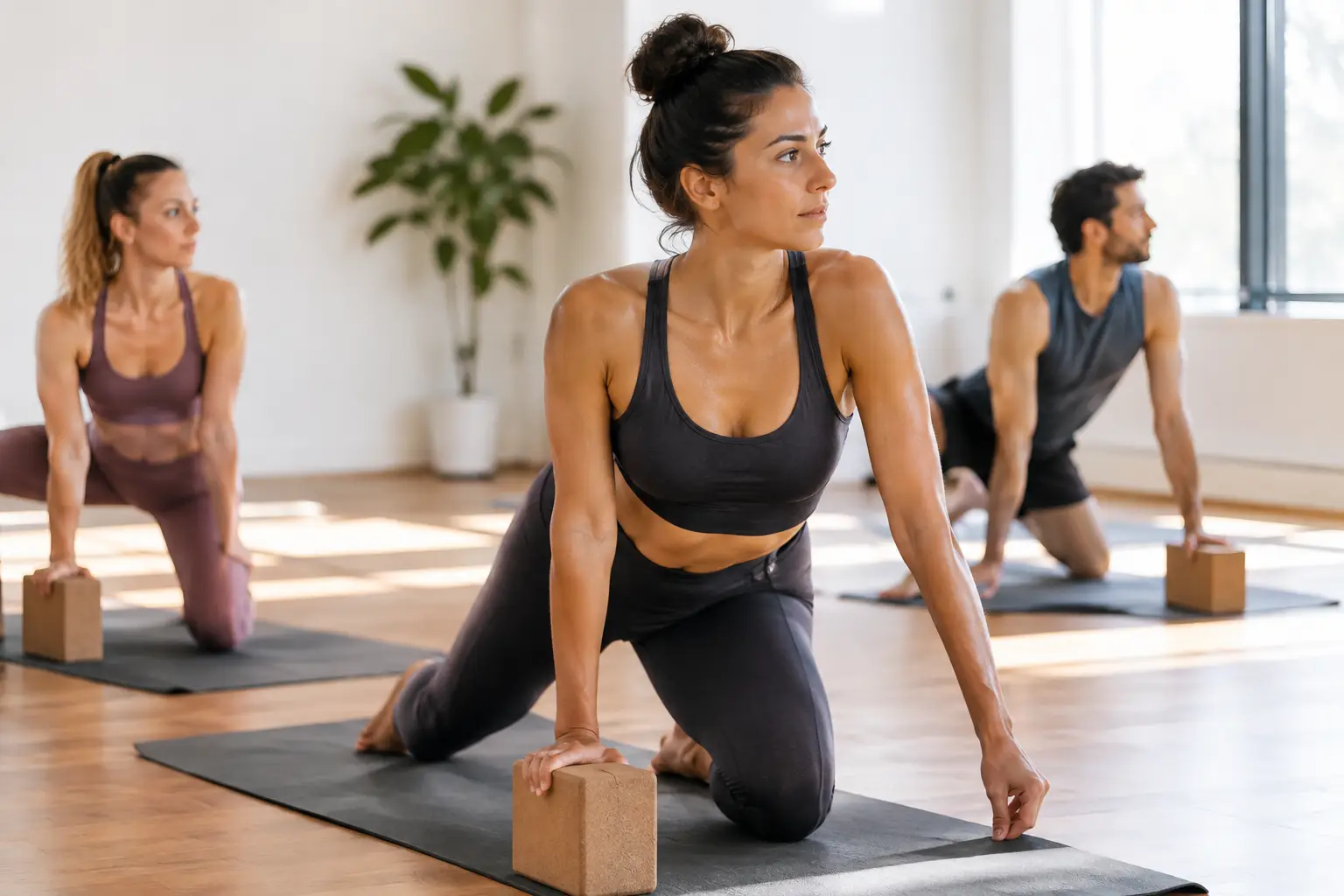
The music is up, the room is warm, and the class is moving into a pose that does not feel right in your body. That is not your cue to push through. Learning to modify yoga poses safely is how you stay in the workout, protect your body, and build the kind of consistency that creates real change.
At Warrior 1 Yoga, we love effort. We love sweat, strength, and that post-class feeling when you know you showed up for yourself. But effort is not the same as forcing a shape. A smart modification can make a pose more powerful, more stable, and more useful for your body today.
Modifications Are Training, Not a Step Back
A yoga pose is not a test you pass by making it look exactly like the person on the mat next to you. Bodies have different proportions, injury histories, strength levels, energy levels, and ranges of motion. Add heat, humidity, fast transitions, or a strength-focused format, and the smartest version of a pose may look different from class to class.
A modification is simply an adjustment to the position, range, support, or intensity of a movement. It helps you find enough challenge to build strength and mobility without crossing into strain. That might mean bending your knees in a forward fold, using a block in a lunge, taking a lower push-up from your knees, or resting in child’s pose while the room flows on.
There is a trade-off to understand: backing off too much can remove the training stimulus, while chasing the deepest expression can take you out of good alignment. Your sweet spot is a shape where you can breathe steadily, stay in control, and feel muscular work without sharp, pinching, or electric pain.
How to Modify Yoga Poses Safely Before You Need To
The best time to choose an option is before your form falls apart. Listen closely during the setup of a pose, then make your adjustment early. If you wait until your shoulder is burning, your balance is gone, or your low back is gripping, it becomes harder to make a calm decision.
Start with your breath. In a heated class, it is normal to work hard and breathe more deeply. It is not a badge of honor to feel dizzy, nauseated, faint, or unable to recover your breathing. Step out, sip water if needed, and take a grounded position. Child’s pose, a seated rest, or lying down can be the strong choice.
Next, check your foundation. In standing poses, spread your toes, press through your feet, and shorten your stance if balance is shaky. In poses that load the hands, place your palms firmly, soften your elbows, and think about pressing the floor away. A strong foundation often solves the problem before you need a bigger modification.
Then reduce range before you abandon the movement entirely. A smaller squat, a shallower lunge, or a lifted back heel can keep the intended muscles working while taking pressure off a sensitive joint. This is especially helpful when you are new to yoga, returning after time away, or building confidence in a heated room.
Smart Options for Common Yoga Poses
Forward Folds and Hamstring Stretches
If your hamstrings pull hard or your low back rounds aggressively in a standing forward fold, bend your knees generously. Let your belly rest closer to your thighs and place your hands on your shins, blocks, or the floor. The goal is not straight legs at all costs. The goal is a long, comfortable spine with a stretch you can breathe through.
For seated forward folds, sit on the edge of a folded blanket or block. Elevating your hips can make it much easier to tip your pelvis forward instead of collapsing through the low back.
Plank, Chaturanga, and Push-Up Work
Plank and chaturanga build serious upper-body and core strength, but they also ask a lot of the wrists, shoulders, and trunk. If your hips sag or your shoulders dip below your elbows during a low push-up, lower your knees to the mat. Keep a long line from knees through shoulders, and lower only as far as you can control.
You can also skip chaturanga completely and move from plank to the floor, or from downward dog directly to hands and knees. This is a strong, intelligent option when fatigue hits in a flow class. Repeating a clean modification builds more strength than repeating a rushed, unstable rep.
If wrists feel cranky, try placing your hands a little farther forward in plank, taking fists when appropriate, or choosing forearm plank. Persistent wrist pain deserves a conversation with a qualified healthcare professional, not more pressure in the pose.
Lunges, Warriors, and Balance Poses
In lunges and Warrior shapes, shorten your stance until you can keep your front knee tracking in the same direction as your toes. Your knee does not need to reach a perfect 90-degree angle. A higher stance can still light up your legs while helping you stay balanced and protect your joints.
For crescent lunge, lower the back knee to the mat if your legs are wobbling or your low back is overworking. In Warrior III, keep fingertips on blocks or a wall rather than fighting for the full airplane shape. Balance improves through repeatable practice, not through one dramatic save.
Hip Openers and Pigeon Variations
Hip openers can feel intense, especially in heated yoga. In pigeon, place a block, bolster, or folded blanket under the outer hip so your pelvis has support. Keep the front shin at an angle that feels workable instead of forcing it parallel to the top of the mat.
If your knee feels pain in pigeon, come out right away. Try reclining figure four on your back instead. You may still feel a deep outer-hip stretch without loading the knee in the same way. Stretch sensation is normal. Joint pain is a stop sign.
Backbends and Overhead Reaches
In cobra, locust, upward-facing dog, and bridge, think about length before height. Keep the back of your neck long, engage your legs and glutes lightly, and avoid throwing your ribs forward. A low cobra can be plenty.
For shoulders that feel tight during overhead reaches, take your arms wider, bend your elbows, or bring your hands to your hips. In bridge, place a block between your thighs to help your legs stay organized, or choose a supported bridge with a block under your sacrum. The pose should create space and strength, not a pinch in the low back or shoulders.
Heat Changes the Decision-Making
Heat can make muscles feel more flexible, but feeling loose is not the same as having control at the end of your range. That is why deep stretches can sneak up on people in hot yoga. Use the room’s warmth to move with intention, not to force your body farther than it can stabilize.
Come hydrated, but do not rely on water alone. Fueling before class, arriving early enough to settle in, and choosing a spot where you can easily step out all help you manage your effort. On days when you are tired, stressed, under-fueled, or getting over an illness, your modification may simply be a lower-intensity practice. That still counts.
If you are pregnant, recently postpartum, recovering from surgery, managing a chronic condition, or working with an injury, get individualized guidance from your healthcare provider. Tell your instructor before class when appropriate. A great teacher wants that information because it helps them offer useful options, not because you need to explain or apologize for your body.
Ask for the Option You Need
A confident student is not the one who never modifies. It is the one who knows how to listen, makes a clear choice, and stays connected to the class without getting pulled into comparison. If you are unsure what to do, make eye contact with your instructor before class or ask afterward about a specific pose. A quick question can give you an option you will use for months.
Keep your focus on what your body is learning: steadier balance, stronger legs, more comfortable shoulders, calmer breathing, and the confidence to show up again. Take the version that lets you move well today, then come back ready to build on it tomorrow.