
Hot Yoga Flow Routine for Strength and Sweat
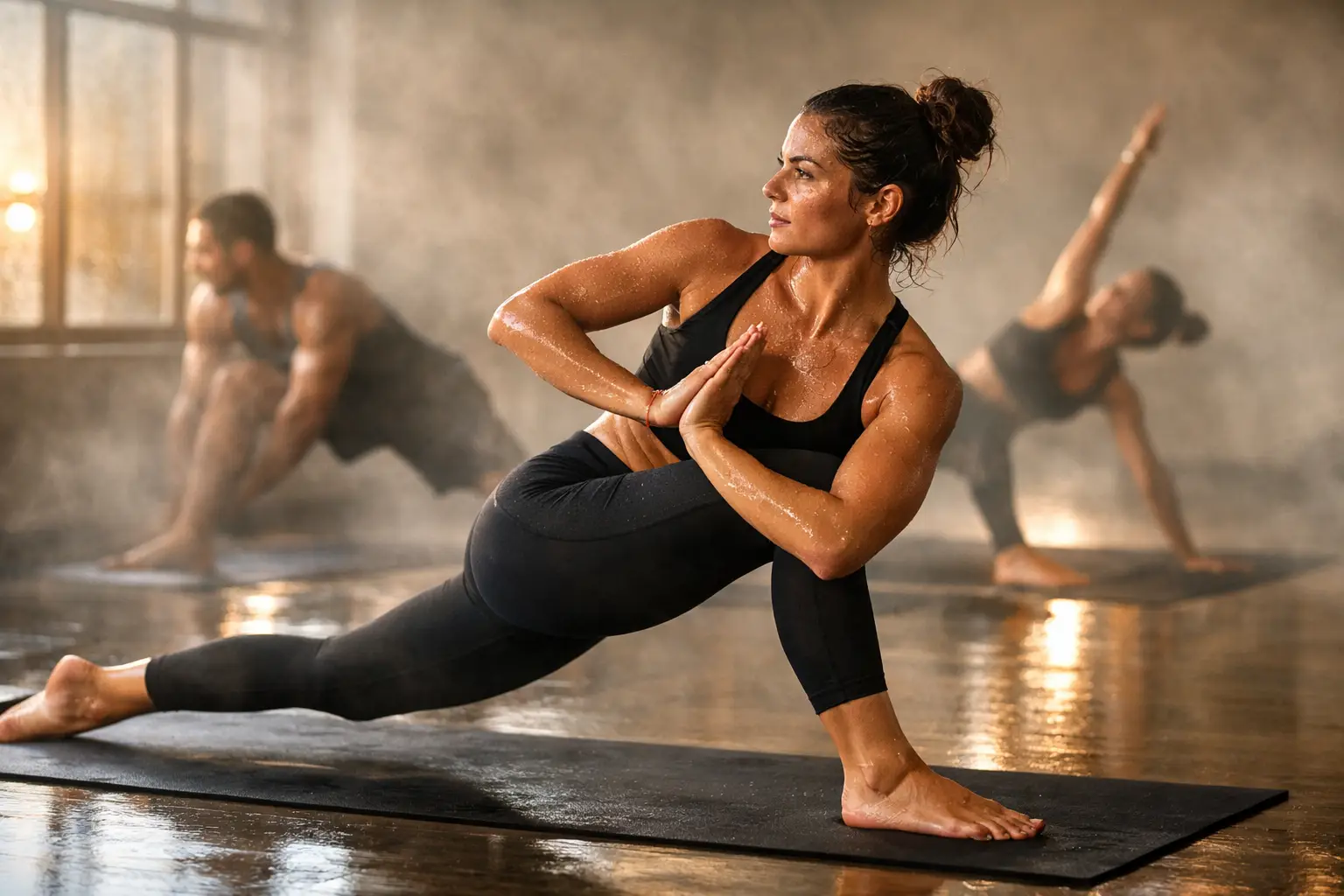
A great hot yoga flow routine should leave you feeling worked, not wrecked. You want the heat, the music, the sweat, and the satisfying shake in your legs – but you also want enough control to move well, breathe steadily, and walk out stronger than when you came in.
That balance is what turns a heated class from a one-time challenge into a fitness habit you actually look forward to. Whether you are brand-new to hot yoga or ready to bring more intention to your practice, the goal is simple: show up, move with purpose, and build your Warrior strength one class at a time.
What a Hot Yoga Flow Routine Should Do
A flow class is more than a stretch session in a warm room. It is a moving sequence that connects breath to strength, mobility, balance, and cardio-style effort. In the heat, your body may feel more open faster, but that does not mean you should force a deeper pose. The win is controlled movement, not showing off your maximum range.
A smart routine usually starts by waking up the body, builds toward standing strength and flowing transitions, then slows down enough for your heart rate and nervous system to settle. The exact class can change with the instructor, the music, and your energy that day. That variety keeps things fun. The foundation, though, stays consistent.
Think of your flow as a full-body workout with a clear rhythm: warm up, build heat, challenge your strength, find your balance, and recover.
Before Class: Set Yourself Up to Win
Hot yoga rewards preparation. Start drinking water well before class instead of trying to chug a full bottle as soon as you step on the mat. If you are coming from work, running errands, or taking care of the family, give yourself a few minutes to arrive mentally too. A rushed entrance often turns into a rushed practice.
Wear breathable clothes that let you move. Bring a large water bottle, a mat towel, and a hand towel. A towel is not just for comfort – it helps create grip once the sweat starts rolling. If you tend to feel lightheaded in heat, avoid practicing on an empty tank. A light snack with carbs and protein one to two hours before class can help, but heavy meals right before class are usually a bad match for twists, forward folds, and core work.
Newer students should choose a spot where they can see the instructor easily, ideally near a door if that helps them feel more comfortable. There is no prize for staying in the hottest part of the room. You are here to train consistently, not prove something on day one.
A Hot Yoga Flow Routine You Can Build On
This sequence reflects the kind of progression that makes a heated flow feel energizing and complete. In a studio class, follow your instructor’s cues first. At home or during your own practice, move through the poses at a pace that keeps your breath smooth.
Start With Breath and Easy Mobility
Begin in a comfortable standing position or child’s pose. Take several slow breaths through your nose, expanding your ribs rather than lifting your shoulders. Then add cat-cow, gentle side bends, and easy hip circles. The room may be hot, but your joints and muscles still need time to wake up.
Move slowly for the first few minutes. This is where you check in with your body. Tight hips, a cranky low back, tired shoulders, or a fast heartbeat are useful information. Meet yourself where you are, then build from there.
Build Heat With Sun Salutations
From standing, flow through a few rounds of sun salutations: reach up, fold forward, lengthen halfway, step or hop back, lower with control, lift into cobra or upward-facing dog, then press back to downward-facing dog.
If you are newer, bend your knees in the forward fold, step back instead of hopping, and lower your knees before taking a chaturanga. Those are not “beginner shortcuts.” They are smart options that help you keep your shoulders and core working together.
For a stronger challenge, slow down the lowering phase. A controlled chaturanga, plank hold, or slow step-through lights up the arms, chest, abs, and legs without needing extra equipment.
Train Your Legs in Warrior Shapes
From downward-facing dog, step one foot forward and rise into Warrior I. Press through your back foot, bend deeply into your front knee, and reach through both arms. Take a few breaths, then open into Warrior II.
This is where the Warrior mindset gets real. Your legs may start to burn. Your shoulders may want to creep up toward your ears. Stay low enough to feel the work, but not so low that your front knee collapses inward. Strong does not mean tense. Keep your jaw soft and your breath moving.
From Warrior II, add reverse warrior, side angle, and a wide-legged fold before switching sides. These shapes build lower-body endurance while opening the hips, side body, hamstrings, and chest. They also teach you how to stay steady when the room gets intense.
Add Balance and Core Control
After the bigger standing shapes, include a balance pose such as tree, eagle, standing knee-to-chest, or warrior III. Heat can make balance feel surprisingly difficult, especially if you are dehydrated or moving too fast. Pick one point to look at, engage your standing leg, and accept the wobbles.
Then bring it down for core work. A few rounds of boat pose, plank knee drives, or slow bicycle twists can create serious heat without turning the practice into chaos. Focus on quality. If your low back starts to lift or strain, bend your knees, shorten the range, or take a break.
Cool Down Without Skipping the Good Part
A strong flow needs a deliberate landing. Pigeon pose or a figure-four stretch can ease the hips after all that standing work. Add a seated forward fold, a gentle spinal twist, and a supported bridge if it feels good in your body.
Finish in savasana. Yes, even if you came in for a calorie-burning workout. Stillness is part of the training. It gives your breath time to slow down and lets your body absorb the effort you just gave it.
How Hard Should You Push in the Heat?
The honest answer: it depends. Some days you will feel powerful and ready to take the fuller expression of a pose. Other days, child’s pose might be the strongest decision you make. Heat can amplify effort, and it can also hide fatigue until it catches up with you.
Use your breath as your gauge. If you can breathe steadily and still respond to the instructor, you are likely in a productive range. If you feel dizzy, nauseated, confused, unusually chilled, or unable to catch your breath, stop, cool down, sip water, and let the instructor know. Taking a break is part of practicing intelligently.
You also do not need to “win” every transition. Step forward. Take knees down. Skip the jump. Use blocks. Rest in child’s pose. Consistency beats going all-out once and disappearing for three weeks.
Make the Routine Work for Your Goals
If your priority is flexibility, stay in your post-class stretches a little longer and avoid forcing range during the hottest part of the sequence. If you want strength, use slow lowers, longer chair-pose holds, strong warrior stances, and intentional core work. If stress relief is your biggest need, let your breath set the pace and choose modifications before your body demands them.
For people who love a high-energy workout, hot yoga can also pair well with strength, cardio, or sculpt-style training during the week. Just respect recovery. A heated flow after a tough leg workout may feel amazing one day and like too much the next. Rotate intensity, sleep when you can, and hydrate consistently.
At Warrior 1 Yoga, that variety is part of the fun: you can bring the heat in a flow class, then build your week around the movement styles that keep you motivated.
Your Best Practice Starts With Showing Up
You do not need perfect balance, advanced flexibility, or a fancy yoga wardrobe to earn your spot on the mat. You need water, a willingness to sweat, and enough patience to keep returning. The first class may feel like a lot. The next one will feel more familiar. Before long, the poses that once made your legs shake will become proof of how far you have come.
Bring your energy, honor your limits, and let each practice be a fresh chance to get stronger, calmer, and more confident in your own body.