
Restorative Yoga Versus Massage: Which Helps?
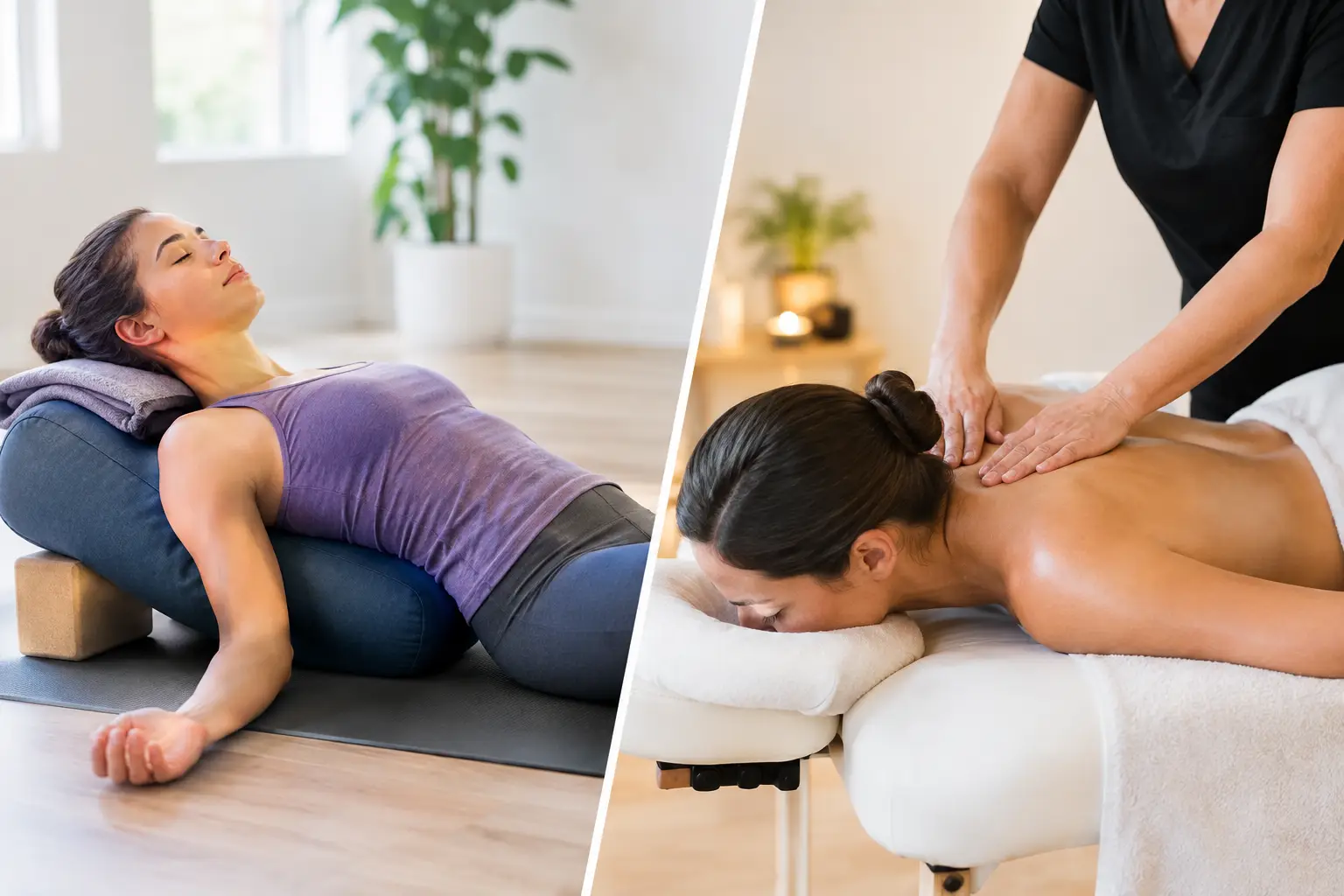
After a sweaty class, a packed workday, or one too many hours at a desk, recovery can feel like another item on your to-do list. The restorative yoga versus massage question is really about what your body needs most right now: quiet nervous-system relief, hands-on work for a stubborn tight spot, or a consistent practice that helps you stay ahead of both.
Both can feel amazing. Both can support a more intentional self-care routine. But they do different jobs, and choosing the right one can make your recovery time feel more effective instead of random.
Restorative Yoga Versus Massage: The Main Difference
Restorative yoga is an active choice to rest. You settle into fully supported poses using props such as bolsters, blankets, blocks, and straps, then stay there long enough for your body to soften. There is no chasing a calorie burn, no racing through transitions, and no pressure to touch your toes. The work is slowing down, breathing, and allowing tension to ease without forcing it.
Massage is hands-on bodywork from a trained professional. Depending on the style and practitioner, it may focus on relaxation, circulation, muscle tension, mobility, or specific areas that feel overworked. A massage therapist can respond directly to what they feel in your tissues and adjust pressure in the moment.
Think of restorative yoga as a recovery practice you participate in and massage as a recovery service you receive. One is not better across the board. The better choice depends on whether you need a reset for your whole system or more targeted attention for your body.
Choose Restorative Yoga When Your Whole System Feels Maxed Out
If your shoulders are creeping toward your ears, your mind is replaying your workday, and your sleep has been less than stellar, restorative yoga may be the move. Long-supported shapes and steady breathing create room to shift out of go-go-go mode. That matters when your workouts, family calendar, job, and phone are all competing for your attention.
Restorative practice is especially useful when you want recovery that feels accessible and repeatable. You do not need to wait for a special occasion or a major flare-up of stress. A class on your schedule can become a weekly appointment with yourself, just like strength training or cardio.
It can also complement a hard-training routine. Maybe you love hot yoga flow, HIIT, kickboxing, yoga sculpt, or a long run around Bakersfield. Those workouts challenge your muscles and build confidence, but recovery deserves a spot on the calendar too. Restorative yoga gives you a chance to move less aggressively while still showing up for your body.
At Warrior 1 Yoga, restorative class can be a powerful counterbalance to the heat, music, sweat, and high-energy training that makes other formats so fun. It is not a lesser workout. It is smart training for the Warrior who wants to keep moving well.
What restorative yoga can do well
Restorative yoga is often a great fit if you want to feel calmer, practice slower breathing, improve your awareness of where you hold tension, and give sore muscles a gentle break. Some people also find that a quiet evening practice helps them transition toward better sleep.
The trade-off is that restorative yoga is not designed to provide precise, deep work on one knot in your upper back or a specific tight calf. You may leave feeling looser and more settled, but it will not mimic a therapist working directly on a problem area.
Choose Massage When You Need Targeted Attention
Massage can make more sense when one area keeps asking for attention. Maybe your neck feels tight after computer work, your quads are sore after a leg-heavy workout, or your lower back feels guarded after a long drive. A qualified massage therapist can assess the area, ask questions, and tailor pressure and technique to your comfort level.
That targeted approach is massage’s biggest advantage. You are not trying to figure out which pose might help. You are receiving individualized, hands-on care in real time.
Massage can also be a great choice when you are dealing with stress but have trouble settling down on your own. Sometimes the act of lying still while someone else handles the details is exactly what your brain needs.
What massage can do well
A session may help you feel temporarily less tight, more relaxed, and more connected to your body. For active people, it can feel especially welcome after a demanding training block, a big event, or a stretch of poor sleep and heavy stress.
The trade-off is consistency. Massage is usually more expensive than a studio class, requires an appointment, and may not be realistic every week. It is also passive by nature. You can receive a great massage and still benefit from building your own mobility, breathing, and recovery habits between sessions.
Your Budget, Schedule, and Preferences Matter
The best recovery routine is not the fanciest one. It is the one you will actually use.
If you thrive with a group schedule, familiar instructors, and the accountability of showing up, restorative yoga may become your most reliable option. You can build it into your week, learn what positions feel good in your body, and carry simple breathing techniques into real life when stress hits.
If you have a specific issue that needs individual attention, or you simply want a deeper hands-on experience, book a massage. A single session can be valuable, particularly when paired with a sustainable movement routine afterward.
For many people, the answer is not restorative yoga or massage. It is restorative yoga most weeks, with massage when your body needs extra support. That combination gives you both regular nervous-system recovery and occasional targeted care.
How to Decide Before You Book
Ask yourself one honest question: what kind of tired am I?
If you are mentally fried, restless, overstimulated, or generally run down, choose restorative yoga. If you can point to a particular place and say, “Right there, that is the problem,” massage may be the more direct fit.
Also consider how you feel after exercise. General post-workout heaviness often responds well to hydration, sleep, gentle movement, and restorative poses. Sharp pain, swelling, numbness, weakness, or pain that does not improve deserves assessment from a qualified medical professional rather than a yoga class or massage appointment.
You should also tell your instructor or massage therapist about injuries, pregnancy, recent surgery, medications, or health conditions that could affect your session. Recovery should feel supportive, not like something you have to push through.
Make Recovery Part of Your Training, Not a Rescue Plan
Waiting until you are completely depleted is a tough way to care for yourself. The body tends to respond better to small, regular recovery habits than an occasional all-out rescue mission.
Try pairing your most intense training days with a quieter recovery choice. After a hard cardio or strength session, you might take a restorative class later in the week. After several stressful days at work, you might choose massage to get focused support, then keep the momentum going with a few minutes of stretching and breathing at home.
The goal is not to earn rest. You do not need to be sore enough, stressed enough, or exhausted enough to deserve it. The goal is to stay connected to your body so you can keep chasing the classes, goals, and life moments that make you feel strong.
Next time your calendar opens up, choose the recovery option that matches the kind of support you need today. Show up, breathe, let your shoulders drop, and give your body a reason to keep showing up for you.
Notice: Trying to get property 'ID' of non-object in /home/warrior/public_html/wp-content/themes/uglyduck/template-parts/singles/single-one.php on line 52