Restorative Yoga vs Yin: Which Reset Fits You?
Your legs are toast after a hot flow. Your shoulders are living somewhere near your ears. You still want to move, but another round of squats, chaturangas, or kickboxing is not the answer. That is where restorative yoga vs yin becomes a useful choice, not just yoga vocabulary.
Both styles slow the pace and can feel like a major exhale after a full week of work, workouts, errands, and real life. But they are built for different jobs. Restorative yoga is about supported rest. Yin yoga is about patient, targeted sensation in the body’s deeper connective tissues. Neither is “better.” The right one depends on whether you need to calm down, open up, or simply give your body a break.
Restorative Yoga vs Yin: The Big Difference
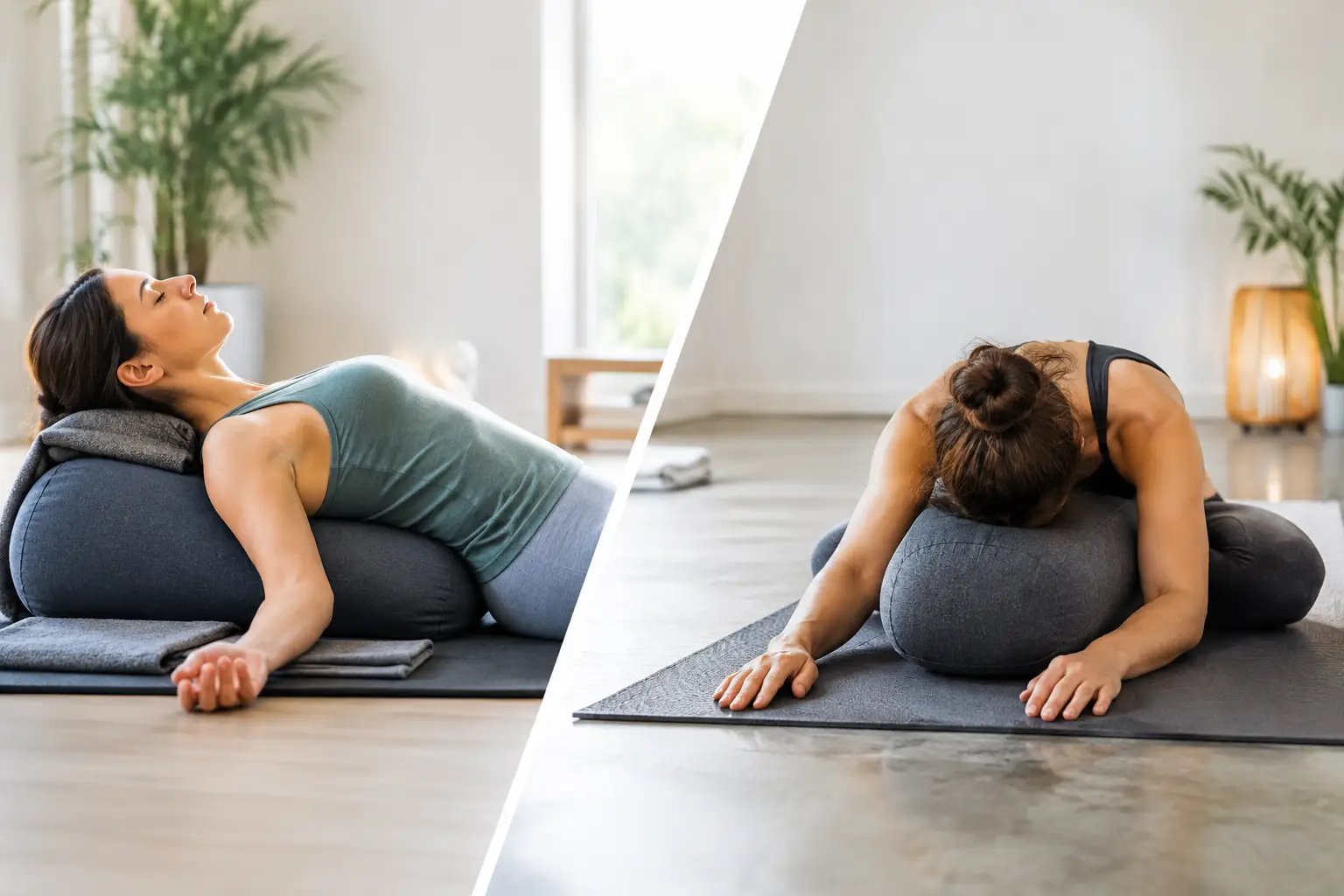
Restorative yoga uses props such as bolsters, blankets, blocks, and sometimes straps to support the body in comfortable, low-effort poses. The goal is to let your muscles soften and your nervous system shift out of go-go-go mode. You may stay in a shape for several minutes, but you should not be working to hold it.
Yin yoga also holds poses for longer than a typical flow class, often two to five minutes or more. The difference is the intention. Instead of fully propping yourself into ease, yin invites a mild to moderate stretch sensation around areas like the hips, hamstrings, spine, and shoulders. You settle into stillness while exploring the edge of your range of motion without forcing it.
Think of restorative as a recharge session. Think of yin as patient flexibility and mobility work with a strong mental challenge built in. Both can be incredibly relaxing, but yin may feel more intense in the moment.
What Restorative Yoga Feels Like
Restorative yoga is the class to choose when your system needs permission to stop pushing. A typical practice may include only a handful of poses, each carefully set up with plenty of support. You might recline over a bolster, rest your legs up a wall, or settle into a gentle twist with blankets under your knees.
There is no prize for stretching farther. In fact, if you feel yourself bracing, clenching your jaw, or counting the seconds until a pose ends, you probably need more support or a different position. The win is being able to breathe normally and let your body get heavy.
This style can be especially helpful after a demanding training week, a long day at a desk, poor sleep, travel, or a stressful season. It is also a smart choice when you are sore but still want the grounding ritual of showing up for class. You are not skipping your wellness routine. You are training recovery.
At Warrior 1 Yoga, that recovery mindset belongs right alongside the heat, music, sweat, and high-energy formats. Strong workouts create results, but recovery is what helps you come back ready to move with power again.
Expect props, pauses, and zero pressure
If you are new to yoga, restorative can feel surprisingly challenging because stillness is unfamiliar. Your brain may keep making a to-do list while the rest of the room gets quiet. That is normal. The practice is not about emptying your mind perfectly. It is about giving your body a safe container to downshift.
Wear comfortable layers, since a restorative class may not generate much body heat. Tell the instructor about injuries, pregnancy, recent surgery, or anything that affects how you move. Small adjustments to prop placement can change a pose completely.
What Yin Yoga Feels Like
Yin is slower than a flow class, but do not confuse slower with easy. When you remain in a hip opener or forward fold for several minutes, you have time to notice every sensation and every urge to escape it. The practice asks for steady breathing, self-awareness, and restraint.
The target is generally the connective tissue around joints rather than the big muscle-building effort of a strength workout. That is why yin often includes shapes that gently stress areas that can feel tight from sitting, running, lifting, cycling, or taking lots of heated classes. Common targets include the outer hips, inner thighs, hamstrings, chest, and upper back.
A useful yin sensation is present but manageable. You may feel a dull stretch, a pull, or mild compression. Sharp pain, tingling, numbness, pinching, or joint pain is a clear signal to back out, add a prop, or choose another variation. More intensity is not more progress.
Yin rewards patience, not force
Yin can improve your relationship with discomfort because it gives you practice staying calm inside a sensation without fighting it. That does not mean you should grit your teeth through a pose. It means learning the difference between a productive edge and a body that is asking for less.
For active people, yin can balance a routine filled with cardio, strength training, yoga sculpt, HIIT, or heated power flows. If your hips feel restricted in lunges or your hamstrings keep limiting your folds, consistent yin may help you explore those patterns over time. Results are personal, though. Bodies vary, and flexibility is never the only measure of a strong practice.
How to Choose Between Restorative and Yin
Check in before you book. Are you mentally fried, underslept, overwhelmed, or deeply sore? Restorative is likely the better call. Do you feel generally energized but stiff, especially through your hips, hamstrings, or back? Yin may be a great fit.
Your workout schedule matters, too. A restorative session can work beautifully after a hard training day or on a true rest day because it asks so little from fatigued muscles. Yin can also complement training, but deep stretches immediately before explosive exercise may not be ideal for everyone. If you have a race, heavy lift, or intense class coming up, save the longer holds for afterward or another day.
There are also days when you need a mix. You may enjoy the focused release of yin but finish class craving a few fully supported restorative shapes. A skilled teacher can help you modify either style so it meets your body where it is that day.
Who Should Be Careful With Long Holds?
Long-held poses are not automatically right for every body. If you are managing an injury, joint instability, osteoporosis, a connective tissue condition, nerve symptoms, or recent surgery, get individualized guidance from a qualified health professional and let your instructor know before class. The same goes for pregnancy, when certain positions and levels of intensity may need adjustment.
People who are naturally very flexible should be especially thoughtful in yin. The goal is not to sink as deeply as possible into a joint. Use props, reduce the range, and focus on muscular engagement when appropriate. Controlled movement and strength work are valuable partners to flexibility.
Restorative yoga is usually gentler, but comfort still matters. A pose should feel supported, not like you are tolerating pressure in your low back, neck, knees, or shoulders. Ask for another blanket. Take the variation. That is Warrior behavior, too.
Make Your Slow Practice Count
Arrive without the expectation that every class has to leave you drenched. Heat and hard work have their place, but recovery is part of a results-driven routine, not a detour from it. For yin, bring your attention to a steady breath and choose a sensation level you can sustain. For restorative, let the props do their job and resist the urge to turn rest into another task to conquer.
You might leave yin feeling open, spacious, and quietly accomplished. You might leave restorative feeling like you finally unclenched after carrying the week on your back. Both are powerful outcomes.
The next time your body asks for something different, listen closely. Choosing the class that supports your energy today is how you keep showing up stronger tomorrow.